
Opens in a new tab
Elder Law & Estate Planning
Request Consultation

Who Gets a Copy of the Will After a Person Dies?

The short answer: while the person is alive, no one is entitled to a copy of their will, not even the people named in it. After death, the executor gets it first, the named beneficiaries are entitled to a copy, and the closest relatives who would have inherited without a will receive formal notice that the will exists. Once the will is filed with the court and admitted to probate, it becomes a public record, and anyone can request a copy for a small fee.
Posted on January 5, 2024 (updated on September 20, 2026)
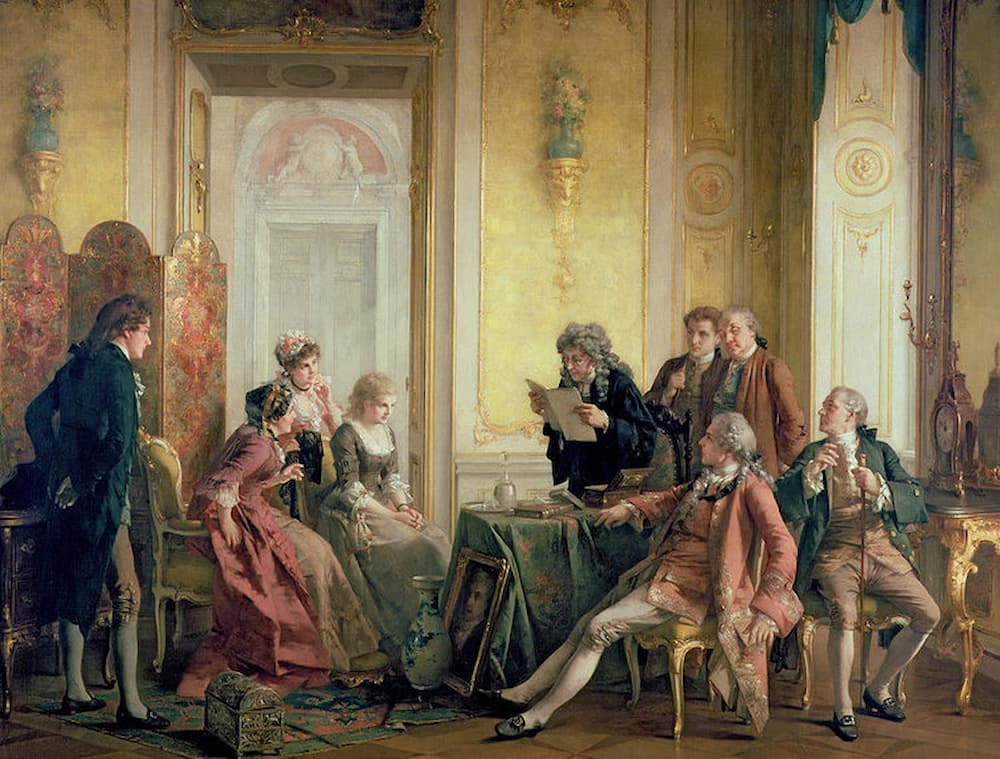
A historical depiction of a family gathered for the reading of a will, highlighting traditional practices in estate planning and elder law.

The dramatic reading of the will in a lawyer’s office is a movie invention. What actually happens is a sequence of legal duties, deadlines, and court filings, and the rules differ enough from state to state that families regularly get them wrong. This article explains who is entitled to what, when, and how to get a copy when the person holding the will will not hand it over.

Takeaways:

  • No one has a right to see a will before the person who made it dies
  • After death, the executor takes possession and must file the will with the court, on a deadline in Connecticut and under court compulsion if necessary in New Jersey and New York
  • Beneficiaries and next of kin are entitled to formal notice that the will has been probated, and in New Jersey to a copy on request
  • A probated will is a public record in all three states, so anyone can obtain a copy from the court

    FREE WEBINAR

    5 Things to Know About

    Estate Planning

    When You Turn Sixty-Five

    Save the Date

    Friday, Oct 9th at 2:30pm


    FREE WEBINAR

    5 Things to Know About

    Estate Planning

    When You Turn Sixty-Five


      Save the Date

      Friday, Oct 9th at 2:30pm

      Is Anyone Entitled to See a Will Before the Person Dies?

      No. A will is a private document until death. The person who signed it can show it to anyone they choose, or to no one, and can change it or revoke it at any time. Being named as a beneficiary or as executor in a draft you happened to see creates no right to anything. Adult children sometimes assume they are entitled to review a parent’s will, especially when a sibling has become involved in the parent’s affairs. They are not, and neither is the sibling.

      If a parent wants to prevent conflict later, the better tool is a conversation while they are alive, not a copy of the document. What can be shared is where the original is kept and who the attorney is, so the people who need to act after death know where to start.

      Who Gets the Will Right After Death?

      The first person who needs the will is the executor named in it, because the executor’s job is to file the will with the court and begin administering the estate. In practice the original is usually in the decedent’s home, in a safe deposit box, or in the drafting attorney’s vault. Whoever finds it should deliver it to the named executor or to the estate’s attorney.

      Each state handles a person who sits on a will differently:

      Connecticut imposes hard deadlines. Anyone holding a will must deliver it to the named executor or to the probate court promptly after learning of the death, and failing to do so within 30 days carries a fine of up to $1,000 or up to a year in jail. A person who knows they are named as executor must apply for probate within 30 days of the death or face a separate fine.

      New York gives the Surrogate’s Court power to compel production. Under the Surrogate’s Court Procedure Act, a person who would receive under the will, a named fiduciary, a guardian of a beneficiary, or a creditor can petition the court to examine anyone believed to have the will and to order it filed.

      New Jersey has no filing deadline for the executor, but a will cannot be admitted to probate until the eleventh day after death. If someone is withholding a will, the Superior Court, Chancery Division, Probate Part has statutory authority to compel discovery of any paper purporting to be a will and to order it lodged with the county Surrogate.

      Do Beneficiaries Get a Copy of the Will?

      Yes, though the mechanics vary.

      In New Jersey, the rule is specific. Within 60 days after the will is probated, the executor must mail written notice to every beneficiary named in the will and to the decedent’s spouse, heirs, next of kin, and anyone else who would have been entitled to letters. The notice must state that the will was probated, where and when, who the executor is, and that a copy of the will will be furnished on request. Proof that the notices were mailed must be filed with the Surrogate within 10 days. If the will leaves anything to charity, the state Attorney General gets notice and a copy as well.

      In New York, before the court issues letters testamentary, the petitioner must send a notice of probate to every legatee, devisee, trustee, guardian, and successor fiduciary named in the will who has not already been served or appeared. The notice need only state that the will has been offered for probate or probated. A copy of the will is not required to accompany it, but the will is in the court file and the recipient can obtain it there.

      In Connecticut, the probate court must hold a hearing before admitting or rejecting a will and must give notice, public or personal or both, to all parties known to be interested in the estate, unless those parties waive notice in writing. The will is part of the court file from the moment it is delivered to the court.

      In all three states, a beneficiary who asks the executor or the estate’s attorney for a copy should get one. Refusing is pointless, since the document is or will shortly be a public record, and it invites exactly the suspicion the executor should want to avoid.

      Do Family Members Who Were Left Out Have a Right to See It?

      In effect, yes. The people who would have inherited if there were no will, the spouse, children, or other next of kin, are entitled to notice that a will has been offered for probate even when the will leaves them nothing. New Jersey’s 60-day notice goes to heirs and next of kin, not just beneficiaries. In New York, those same people, called distributees, must be served with process in the probate proceeding and can examine the will in the court file.

      This is not a courtesy. The notice starts the clock on a will contest. In New Jersey, a person who wants to challenge a probated will generally has four months from the date of probate if they lived in the state when the will was probated and six months if they lived elsewhere. The court can extend either period by up to 30 days on a showing of good cause and no prejudice. An executor who skips the notice loses the protection of that deadline. Our article on what to do when a family member contests a will in New Jersey covers the grounds and the process.

      Is There a Formal Reading of the Will?

      No. Nothing in the law requires a will to be read aloud, and no one has to gather anywhere. The “reading” survives in fiction because it is a convenient way to put a family in one room. In real life the beneficiaries learn what the will says by receiving the notice described above, by asking the executor for a copy, or by reading it in the court file.

      How Do You Get a Copy of a Will After Someone Dies?

      Start with the executor or the attorney handling the estate. If you are a beneficiary or a close relative, you are entitled to ask and should expect a copy.

      If that does not work, or if you are not a relative, wait until the will is probated and go to the court:

      • New Jersey: the Surrogate’s Court of the county where the decedent lived. Records are open to the public. Bring the decedent’s name and approximate date of death. Search and copy fees are modest and vary by county.
      • New York: the Surrogate’s Court of the county where the decedent lived. Once the will is admitted, the file is public. Many counties offer online record searches.
      • Connecticut: the Probate Court for the district where the decedent lived. Probated wills are public, files can be viewed at the court, and many districts provide electronic access.

      If no will has been filed and you believe one exists, the remedies are the ones described above: a petition to compel production in New York, an action in the Chancery Division, Probate Part in New Jersey, or a report to the probate court in Connecticut, where the custodian faces penalties for sitting on it. If no will exists at all, the estate passes under the intestacy statute. Our article on what happens if you die without a will in New Jersey explains who inherits in that case.

      What If You Want Your Own Will to Stay Private?

      You cannot keep a probated will out of the public record. What you can do is keep most of your assets out of the will. Property held in a revocable living trust passes under the trust’s terms, and the trust document is not filed with any court. Beneficiary designations and jointly held accounts pass outside probate as well. Families who care about privacy, or who have reasons not to advertise who received what, plan around the will rather than relying on it. Our article on what becomes public in an estate plan and what does not walks through the options.

      Stay updated on how to protect everything you’ve worked for so hard during your life.

        Plan Well. Live Better.

        Most disputes over access to a will come from silence: an executor who does not send the notice, a sibling who will not share the document, a family that never discussed where the original was kept. The notice rules are designed to end that silence within weeks of probate. At Milvidskiy Law Group, we guide executors through the notice requirements and help beneficiaries and heirs get the information they are entitled to. Learn more about our probate and estate administration services.

        This article is for general informational purposes only and does not constitute legal advice. Reading this article does not create an attorney-client relationship. Probate procedures, notice requirements, and deadlines differ by state and county and change over time. The rules described were verified as of September 2026 and should be confirmed before relying on them in a specific matter.

        More from our blog...

        A wall of framed family photographs and artwork representing the personal property and estate assets an executor in New Jersey is responsible for managing and distributing after a loved one dies.

        What Does an Executor Actually Do? A Plain-Language Guide for New Jersey Families

        October 4, 2026
        Being named executor of someone's estate feels like an honor until the paperwork arrives. The role carries real legal responsibility, a defined set of tasks…
        An older hand and a younger hand reaching toward each other with the words "Doing the Math" — how long-term care costs are erasing inheritances and what New Jersey families can do

        Long-Term Care Is Erasing the Inheritance You Expected. Here Is What Families in New Jersey Can Do About It.

        October 1, 2026
        In late July, The Washington Post published a detailed analysis of federal data tracking how Americans spend money in their final decade. The findings were…
        A grand Gilded Age mansion with formal gardens and the words "Vanderbilt vs. Rockefeller" — what two American dynasties teach us about estate planning and multi-generational wealth

        Two Families, Two Fortunes, Two Very Different Outcomes: What the Rockefellers and Vanderbilts Teach Us About Estate Planning

        September 27, 2026
        Cornelius Vanderbilt died in 1877 with an estimated fortune of $105 million. Measured as a share of the American economy at the time, The New…
        fountain pen resting on an open handwritten journal with the words "Generations Strong" — what is a dynasty trust and how it works for multi-generational wealth planning in New Jersey

        What Is a Dynasty Trust and Is It Right for Your Family?

        September 24, 2026
        A dynasty trust is an irrevocable trust designed to hold family wealth across multiple generations, with the goal of passing assets to children, grandchildren, and…
        Back To blog

        Table of Contents

        FREE WEBINAR

        5 Things to Know About

        Estate Planning

        When You Turn Sixty-Five


          Save the Date

          Friday, Oct 9th at 2:30pm

          Privacy Policy

          This Privacy Statement describes how Milvidskiy Law Group P.C. collects, uses, and discloses certain personal information obtained through our public web site at www.milvidlaw.com (the “Web Site”). This Privacy Statement does not address information collection through other sources such as in-person seminars, workshops, or in-person consultations and contacts.

          SMS Privacy Policy

          Milvidskiy Law Group P.C. may disclose Personal Data and other information as follows:

          Third Parties that Help Provide the Messaging Service: We will not share your opt-in to an SMS short code campaign with a third party for purposes unrelated to supporting you in connection with that campaign. We may share your Personal Data with third parties that help us provide the messaging service, including, but not limited to, platform providers, phone companies, and other vendors who assist us in the delivery of text messages.

          Additional Disclosures: Affiliates: We may disclose the Personal Data to our affiliates or subsidiaries; however, if we do so, their use and disclosure of your Personal Data will be subject to this Policy. All the above categories exclude text messaging originator opt-in data and consent; this information will not be shared with any third parties.

          Personal Information Collection and Use

          In general, you can visit our Web Site without telling us who you are or revealing any information about yourself. There are times, however, when we ask for personally identifiable information from you, such as your name, company, e-mail address, phone number, and address (“Personal Information”). We request this information in order to correspond with you, to provide you with a subscription to a newsletter or publication, to notify you about events, or otherwise to respond to your requests or provide you with information that we consider may be of interest to you. Where applicable, we will differentiate between personal data fields that are optional and those that are mandatory to obtain the requested information.

          If you receive a marketing e-mail from Milvidskiy Law Group P.C., you will be provided with an automated way to opt out (unsubscribe) from that particular communication or from all marketing e-mails sent by our firm. Please follow the instructions on the e-mail you received. If you have received unwanted e-mail from our firm, please forward a copy of that e-mail to [email protected].

          Please note that if you reply to a Milvidskiy Law Group P.C. address in one of our marketing e-mails or otherwise send a communication to us, your communication will not create an attorney-client relationship with us. Do not send us any information that you or anyone else considers to be confidential or secret unless we have first agreed to be your lawyers in that matter. Any information you send us before we agree to be your lawyers cannot be protected from disclosure.

          Data Sharing

          We may share Personal Information among our member attorneys for purposes of responding to your requests or otherwise as necessary for the purposes described above. We may also in limited circumstances share Personal Information with government authorities or others as required to protect the interests of the firm or others, as necessary in connection with the sale or transfer of all or a portion of the business, or as required by applicable law or court order.

          International Data Transfers

          This Web Site is hosted on a web server in the United States. If you are located in a non-US jurisdiction, your provision of Personal Information or other access to our Web Site constitutes your transfer of such data to the United States, a jurisdiction that may not provide a level of data protection equivalent to the laws in your home country.

          Security Measures

          Milvidskiy Law Group P.C. maintains appropriate technical and organizational security measures to protect the security of your Personal Information against the loss, misuse, unauthorized access, disclosure or alteration.

          Links to Other Web Sites

          The privacy practices set forth in this Privacy Statement are for our web site only. This web site may contain links to other sites. Milvidskiy Law Group P.C. is not responsible for the privacy practices or the content of such sites. If you link to or otherwise visit any other site, please review the privacy policies posted at that site.

          Cookies and Passive Tracking

          A “cookie” is an element of data that can be sent to your browser. Your browser may then store it on your system based on the preferences you have set on your browser. Cookies gather information about your operating system including, but not limited to, browser type, and Internet Protocol (IP) address. The Web Site uses this information to analyze the traffic on our web site, and better serve you when you return to our web site. It is not our intention to use such information to personally identify a user. You have the option to configure your Internet browser to notify you when you receive a cookie, giving you the chance to decide whether to accept it. Further, you have the option to block all cookies. Please note, however, that if you refuse or otherwise block cookies you may not be able to use all of the functionality available on the web site.

          Access and Correction

          If you wish to access or update the Personal Information you submit through our web site, or to make any inquiries about the processing of such information, please contact us as described below. We provide individuals with access to their Personal Information where we believe appropriate, including in situations where you are entitled to access and review your Personal Information under applicable data protection and privacy laws.

          Google ReCaptcha Spam Protection

          This site is protected by reCAPTCHA and the Google.
          Privacy Policy and
          Terms of Serice apply.

          Revisions to this Privacy Statement

          Milvidskiy Law Group P.C. reserves the right to change this Privacy Policy from time to time. Please check the Privacy Statement frequently and particularly before you submit additional personal information via the Web Site. All revisions to this Privacy Statement will be posted on the web site via a link from the homepage. We also display the effective date of the Privacy Statement on the top of this page.

          Close

          Disclaimer

          Attorney Advertising. The information presented on this website is for informational purposes only and should not be construed as a legal advice. Viewing of, responding to, or otherwise transmitting the information on this website is not intended to create, and receipt of the same does not constitute, an attorney-client relationship. The information provided on this website should not be relied upon without first seeking professional legal counsel. The information on this website is provided only as general information which may or may not reflect the most current developments of law. Prior results and cases discussed on this website do not imply and do not guarantee a similar outcome in any other case. The links to other websites contained herein do not constitute a referral or endorsement of any kind.
          Close
          Sign up for our newsletter to be updated on all the latest news in Elder Law and Estate Planning.

            Every plan starts with a conversation. Tell us a little about your situation, and our Client Services Coordinator will reach out to help you schedule your consultation.

              This site is protected by reCAPTCHA and the Google.
              Privacy Policy and Terms of Service apply.

              Open chat Call us Close chat
              Start a conversation
              Team member Team member Team member
              Contact us to protect what matters most to you and your loved ones