
How Do You Divide Personal Belongings Fairly After a Death?
The short answer: the fairest way to divide furniture, jewelry, photographs, and the rest of a parent’s belongings is to decide the method before anyone picks up a single item, and the best time to decide is while the parent is alive and can say who should get what. Money divides by arithmetic. Belongings do not, and the fights over them are rarely about value. In our experience, a written list from the person who owned the things settles more disputes than any other tool, but whether that list is legally binding depends on the state. New Jersey enforces a signed list referred to in the will. New York and Connecticut do not, and in those states the items have to be in the will or trust itself to be binding.
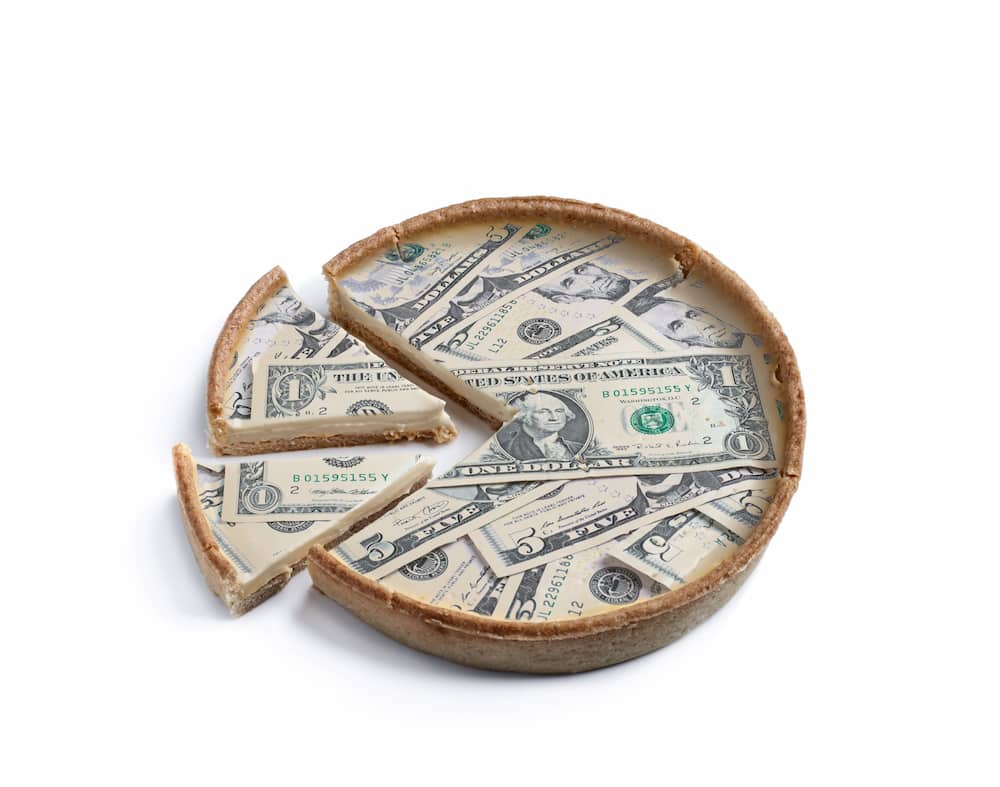
This article explains why belongings cause so much trouble, what the law in each of those states lets you do in advance, whether household items go through probate and get taxed, and seven methods families use to divide what the will does not cover.
Takeaways:
- New Jersey law makes a signed or handwritten list of who gets which items binding if the will refers to it, and the list can be changed without redoing the will
- New York and Connecticut do not give such a list legal effect; specific items must be left in the will, a codicil, or a trust, or the executor must be given discretion to follow the list
- Household items are probate assets, count toward estate and inheritance taxes, and valuable pieces may need a professional appraisal
- Rotating picks, sticker rounds, appraisals with equalizing payments, and a neutral third party resolve most disputes when the deceased left no instructions

FREE WEBINAR
5 Things to Know About
Estate Planning
When You Turn Sixty-Five
Why Are Personal Belongings the Hardest Part of an Estate?
An executor can divide a brokerage account to the penny. A dining room table, a grandmother’s ring, and forty years of photographs cannot be split, and the people who want them usually want them for reasons that have nothing to do with price. Items of little monetary value often carry the most emotional weight, and when two siblings each feel a claim to the same one, the estate becomes the stage for grievances that go back decades. Adult children revert to the roles they had as teenagers. The sibling who lived nearby and did the caregiving feels entitled. The one who lived far away feels excluded. None of this shows up on the inventory.
The process also tends to happen at the worst time, in the weeks after a death, often under pressure to empty a house that is being sold. A plan made in advance removes most of the pressure.
Can You Leave a Separate List of Who Gets What?
This is the question the answer to which depends on where the person lived, and it is where most online guidance goes wrong by assuming every state follows the same rule.
New Jersey: yes, and it is binding. Under N.J.S.A. 3B:3-11, a will “may refer to a written statement or list to dispose of items of tangible personal property not otherwise specifically disposed of by the will, other than money.” To be effective, the writing must be either in the testator’s handwriting or signed by the testator, and it must describe the items and the recipients with reasonable certainty. The statute expressly allows the list to be prepared before or after the will is signed, to be altered afterward, and to have no legal significance on its own. That means a New Jersey resident whose will contains the reference can keep a signed list in the desk drawer, cross items off, add new ones, and re-sign it, without a codicil or a trip to the lawyer. The list controls, and the executor must follow it. The one requirement that trips people up is that the will has to contain the reference; a list attached to a will that never mentions it is not covered.
New York: no. New York has never adopted the separate-writing rule, and New York courts have long held, since Booth v. Baptist Church in 1891, that an unattested paper of a testamentary nature cannot be treated as part of the will even if the will refers to it. A New Yorker’s handwritten list of who gets the silver is an expression of wishes that the executor may honor but that no one can enforce. New York practitioners work around this in two ways: by putting the items that matter most into the will or a codicil, executed with the usual formalities, and by giving the executor express discretion to distribute the remaining tangible property “in accordance with any written memorandum I may leave,” which makes the list a guide the executor is authorized to follow rather than a binding instrument. A revocable trust that holds the tangible property is a third route, since the trust can be amended without probate formalities, though New York still requires trust amendments to be in writing and properly executed.
Connecticut: no statute, and the doctrine is narrow. Connecticut has not enacted a separate-writing statute, and Connecticut practitioners generally advise that the state does not recognize incorporation by reference of outside documents into a will. The safe course in Connecticut is the same as in New York: put binding gifts of specific items in the will or trust itself, and use a memorandum only as guidance for an executor who has been given discretion to follow it.
For a family with property in more than one state, the rule that matters is the law of the decedent’s domicile, so a New Jersey resident’s list works for items in the Florida condominium, and a New Yorker’s list does not become binding because the ring is kept in a New Jersey safe deposit box.
What Should Be in the Will Itself?
Whatever state you live in, some things belong in the will rather than on a list:
- The high-value and high-conflict items. Jewelry, art, collections, and anything two people have already asked for should be specifically bequeathed, with a description precise enough to identify the piece.
- A method for everything else. A clause directing that the remaining tangible property be divided “as my children shall agree, and failing agreement as my executor shall determine” gives the executor authority to impose a rotation or a sale rather than mediate indefinitely.
- An equalization clause. State whether items received count against a child’s share of the residue at appraised value or are gifts in addition to it. Silence on this point causes as many fights as the items themselves.
- Costs. Say whether the estate or the recipient pays for packing, shipping, and insurance. A child in California who inherits a piano learns quickly that this matters.
- The fallback. Direct what happens to items no one wants: sale, donation, or disposal at the executor’s discretion, so a house can be emptied without a family vote on every lamp.
Do Household Items Go Through Probate and Get Taxed?
Yes to both, though the practical burden is usually light.
Tangible personal property owned in the decedent’s sole name is a probate asset. The executor has legal authority over it only after being appointed, and until then no one has the right to remove items from the house. In practice families distribute low-value keepsakes informally, and no court objects, but an executor who lets a sibling clear out the jewelry before letters issue has a problem if another heir later complains. The executor should photograph and inventory the contents before anything leaves, keep the valuable items secure, and distribute after debts and taxes are provided for.
For tax purposes, everything the decedent owned is part of the gross estate. For a federal estate tax return, the Treasury regulations require a sworn appraisal by a qualified expert if the household and personal effects include articles of “marked artistic or intrinsic value” totaling more than 3,000 dollars, listing jewelry, furs, silverware, paintings, antiques, rare books, and coin or stamp collections as examples. Most estates are far below the federal exclusion of 15 million dollars for 2026 and file no federal return, but New York and Connecticut estate tax returns use the same valuation principles, and an appraisal protects the executor whenever items of real value are being divided.
New Jersey adds a wrinkle. New Jersey has no estate tax for deaths after 2017 but still imposes an inheritance tax based on who receives the property. Items passing to a spouse, child, grandchild, parent, or stepchild, the Class A beneficiaries, are exempt. Items passing to a sibling or a child’s spouse, Class C, are taxed after the first 25,000 dollars at rates from 11 to 16 percent. Items passing to anyone else, Class D, including a niece, a friend, or a longtime companion, are taxed at 15 percent on the first 700,000 dollars and 16 percent above that. A New Jersey resident who leaves a valuable painting to a friend is leaving that friend a tax bill.
Seven Ways to Divide What the Will Doesn’t Cover
When the deceased left no instructions, or left instructions only for a few items, families need a procedure. These are the ones that work:
- Rotating picks. Draw lots for order, then take turns choosing one item at a time, reversing or rotating the order each round so that the person who picked last in one round picks first in the next. This is the single most common method and the hardest to call unfair.
- Sticker rounds. Give each person a color and let everyone tag the items they want. Anything with one sticker goes to that person. Only the items with two or more stickers need a further method, which shrinks the fight to a handful of pieces.
- Appraise and equalize. When a few items are worth far more than the rest, have them appraised. Then either let the person who takes the valuable piece pay the others their shares, count it against their share of the residue, or sell it and divide the proceeds. Without this step the person who draws first pick may walk away with most of the value.
- Copy what can be copied. Photographs, home videos, letters, and recipes can be digitized so that everyone receives a complete set. Many families find that a high-quality copy satisfies most of the emotional claim.
- Use an online inventory tool. Several services let families photograph and catalog the contents of a house and run a fair division remotely, which solves the problem of siblings who live in different states and cannot all be in the house on the same day.
- Bring in a neutral professional. A senior move manager or estate liquidator can inventory, value, and distribute items and has no stake in who gets the clock. Their fee is usually small relative to the cost of a stalled estate.
- Mediate. When a dispute has hardened, a trained mediator, or in some cases the estate attorney acting in that role, can get at what the items represent to each person and find a resolution that a court order never would. Litigation over tangible property almost always costs more than the property is worth.
Most families use a combination. The important thing is to agree on the method before anyone starts choosing, put it in writing, and set a date by which the process will be done.
Should You Give Things Away While You Are Alive?
Often, yes. Handing a daughter the ring at a family dinner removes it from the estate, lets the giver see it enjoyed, and eliminates one future argument. For 2026 the federal gift tax annual exclusion is 19,000 dollars per recipient, and gifts of tangible items within that amount require no reporting. Two cautions apply. A lifetime gift carries the giver’s original cost basis, while an inherited item receives a step-up in basis to its value at death, which matters only for items that have appreciated and might be sold. And for anyone who may need Medicaid for long-term care within five years, gifts of valuable items count as transfers subject to the look-back period.
For a broader look at the documents that make an estate easier to settle, see our article on who gets a copy of the will after someone dies.
Plan Well. Live Better.
The families who divide belongings peacefully are almost always the ones whose parent made the decisions in advance and put them in a form the law will enforce. At Milvidskiy Law Group, we help clients build estate plans that address the things that cause conflict, not just the things that have a dollar value. Learn more about our estate planning services.
This article is for general informational purposes only and does not constitute legal or tax advice. Reading it does not create an attorney-client relationship. The rules described vary by state and change over time. Statutes, tax rates, and figures were verified in September 2026 against New Jersey, New York, Connecticut, and federal sources and should be confirmed before relying on them.
More from our blog...

2027 Social Security COLA: What the 3.6% Increase Means for Your Budget

What Estate Planning Documents Do You Actually Need?

What Happens When an Aging Parent Can No Longer Manage Their Own Money?

What Happens to My IRA When I Die? And Can I Leave It to Whoever I Want?
Recent blog posts
What Estate Planning Documents Do You Actually Need?
Table of Contents

FREE WEBINAR
5 Things to Know About
Estate Planning
When You Turn Sixty-Five







