Why Smart People Procrastinate on Estate Planning (and What Finally Gets Them to Act)
People who do not have an estate plan are rarely irresponsible. They are busy, capable, high-functioning adults who have handled far more complicated things than a will. That is exactly what makes estate planning procrastination so puzzling, and so worth understanding.
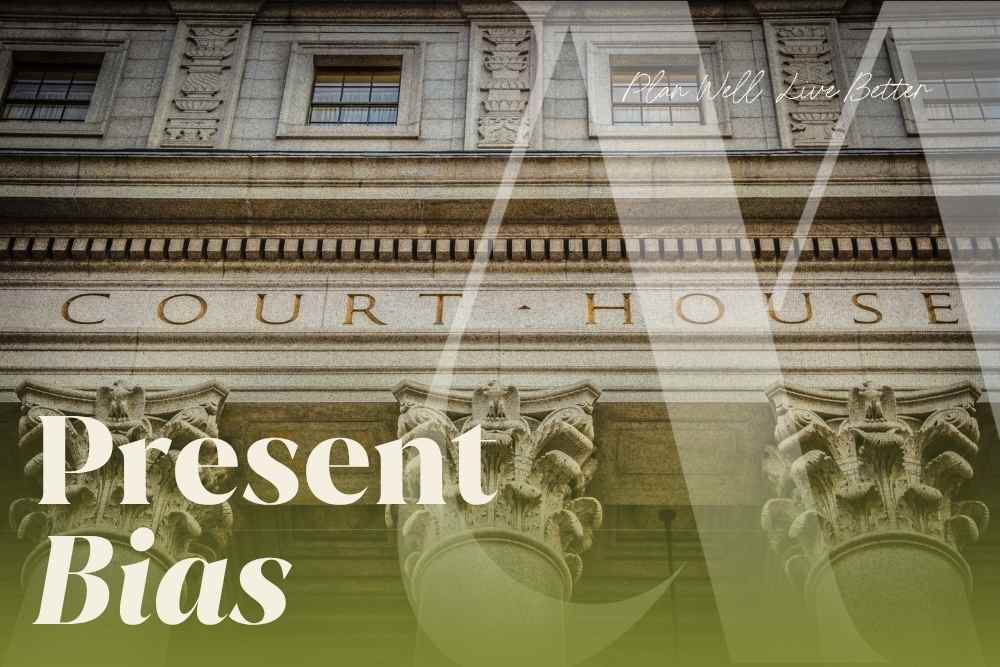
The problem is not knowledge. It is psychology.
Takeaways:
- Why high earners and highly educated people procrastinate on estate planning more than average, not less
- The behavioral economics concept that explains why we defer important decisions indefinitely
- The specific fear responses that make estate planning feel psychologically threatening
- What actually breaks the pattern, and why waiting for the right moment usually means waiting too long

FREE WEBINAR
5 Things to Know About
Estate Planning
When You Turn Sixty-Five
The People Most Likely to Procrastinate Are the People Who Know Better
Here is the data point that surprises almost everyone: the people who most consistently put off estate planning are not those who are unaware of its importance. They are among the most aware.
According to Caring.com’s 2022 Wills and Estate Planning Study, 63 percent of Americans earning $80,000 or more cited procrastination as their primary reason for not having an estate plan. Two out of three Americans with postgraduate degrees said the same. In contrast, lower-income respondents were more likely to cite a perceived lack of assets, a reason that, while also a misconception, is at least logically coherent. Among high earners and the highly educated, the barrier is not understanding. It is the consistent failure to act on what they already understand.
This pattern recurs across every annual survey that has examined it. Caring.com’s 2025 study found that 76 percent of Americans have no will, a figure that has actually worsened since 2022, when it stood at 67 percent. The Trust and Will 2025 Estate Planning Report, based on 10,000 respondents, found that 83 percent of Americans recognize the importance of estate planning, yet only 31 percent have a will. That gap, between knowing and doing, is not a coincidence. It is a pattern, and it has a name.
Present Bias: The Behavioral Economics of Doing It Later
Behavioral economists use the term “present bias” to describe a predictable flaw in human decision-making: we systematically overvalue what is happening now, and undervalue costs and consequences that live in the future.
The concept, developed through decades of research by economists including Nobel laureate Richard Thaler and documented extensively in the National Institutes of Health behavioral economics literature, explains why people plan to save for retirement and then do not, plan to exercise next week and then do not, and plan to get their affairs in order, definitely before the end of the year, and then find themselves saying the same thing twelve months later.
Present bias does not mean a person is lazy or indifferent. It means they are human. The cost of doing estate planning today is concrete and immediate: it requires time, a phone call, an appointment, decisions about uncomfortable topics. The benefit is entirely abstract and deferred. Something good happens for people you love, in a future you cannot really picture, under circumstances you would rather not imagine. Against the pull of today’s to-do list, that future benefit rarely wins.
What makes this particularly stubborn for smart people is something researchers call naive optimism, the additional belief that future-you will handle this. Future-you is less busy. Future-you has more time. Future-you will get to it. The research suggests this is almost always wrong. Future-you faces the same present bias as current-you, and also has a new list of urgent things to do first.
The Fear Underneath the Procrastination
Present bias explains the deferral. It does not fully explain the resistance. For that, there is another layer.
Research in estate planning psychology, particularly the work of Dr. Russell N. James III at Texas Tech University, identifies something called “mortality salience” as a significant driver of avoidance. Mortality salience is simply the awareness of one’s own death, and according to decades of research in this area, humans are strongly motivated to suppress it. Estate planning, by its nature, requires sitting with that awareness long enough to make decisions. For many people, that is genuinely uncomfortable in ways they may not consciously articulate.
What this looks like in practice is a set of avoidance behaviors that feel entirely rational from the inside. Dr. James describes three common ones: distraction (“I’m too busy to deal with this right now”), differentiation (“that’s more relevant for people older than me, or sicker than me, or wealthier than me”), and denial (“something bad happening to me is not really a realistic concern at this stage of my life”). Each of these feels like a sensible observation. None of them hold up under scrutiny.
There is also a secondary fear that does not get discussed enough: the fear of the conversation itself. Choosing an executor means admitting you trust one sibling more than another. Naming a guardian for your children means imagining the scenario where you are not there. Deciding how assets should pass means acknowledging that your family’s dynamics are complicated, and that putting it in writing makes those complications permanent. These are real emotional hurdles, and they are not irrational. But they are not a reason to leave your family without protection.
The Specific Patterns That Keep Smart People Stuck
Procrastination on estate planning tends to cluster into a few recognizable patterns, each of which has its own internal logic.
“I do not have enough yet.” This is among the more persistent misconceptions, particularly among younger adults and those who think of estate planning as something for the wealthy. The Trust and Will 2025 report found this belief most prevalent among millennials, of whom over 60 percent have no estate planning documents at all. In reality, estate planning is not about what you own. It is about what happens when you cannot speak for yourself: who makes medical decisions, who handles your finances, who raises your children if you have them. Those questions exist at every income level.
“I will do it when things settle down.” This one is particularly common among high-achievers, who tend to live in seasons of intensity followed by anticipation of a quieter future that rarely arrives. The research on present bias suggests that “when things settle down” functions as a perpetual horizon. Always visible, never reachable.
“I am not sure who I would pick.” Decision paralysis around executor selection, guardian designation, or trustee choice is a documented barrier. The difficulty of one hard decision causes the entire task to stall. This is worth naming because the solution is simpler than many people assume: a good estate planning attorney has guided thousands of families through exactly these conversations.
“I started looking into it online and got overwhelmed.” This is increasingly common, and it is a reasonable response to fragmented, often contradictory online content. That confusion is not a reflection of the actual complexity of putting a basic plan in place.
What Finally Gets People to Act
The research on this is consistent, and a little sobering. Caring.com’s 2025 study found that a medical diagnosis or significant health concern was the single largest motivator for Americans to start estate planning. The purchase of a major asset, most often a home, was second. Retirement planning was third.
What this means in practice is that action rarely comes until something makes the abstract suddenly concrete. A parent receives a diagnosis. A friend the same age has a stroke. A family goes through a difficult experience settling an estate without a plan in place. Suddenly, “I should really get to that” becomes “I need to handle this now.”
The problem with waiting for that moment is that it is, by definition, a moment of stress, reduced cognitive capacity, and compressed time. Decisions made under those conditions are rarely as carefully considered as decisions made in advance. As Dr. James’s research notes, estate planning done under conditions of death anxiety tends toward rushed choices that people later regret or that fail to reflect their actual wishes.
There is a better trigger: the decision to act before you have to. This does not require overcoming the fear of mortality. It does not even require thinking about death. It requires reframing the task from “planning for my death” to “protecting my family right now,” which is, in fact, a more accurate description of what estate planning actually does. Powers of attorney protect you if you become incapacitated next year. A will protects your children’s guardianship from being decided by a court. A healthcare directive protects your right to make medical decisions even when you cannot speak. These are present-tense protections for living people.
Plan Well. Live Better.
The research is clear that people who complete their estate plans consistently report reduced anxiety, not increased anxiety, about the future. The dread is in the anticipation, not the doing. At Milvidskiy Law Group, we work with families across New Jersey and New York who are ready to stop deferring and start protecting what matters most to them. The conversation is simpler than many people expect, and the relief on the other side is real.
This article is for informational purposes only and does not constitute legal advice. Estate planning and elder law are highly individual. What is right for one family may not be right for another. We encourage you to speak with a qualified attorney to discuss your specific situation.
More from our blog...

Aging Alone: What to Do Legally and Financially When There Is No Spouse or Partner to Plan With
Estate Planning Is Built Around Death. But What About Everything That Comes Before It?
What Is a Step-Up in Basis and Why Does It Matter When You Inherit?
My Parents Are Getting Older. What Should We Be Doing Now?
Recent blog posts
Aging Alone: What to Do Legally and Financially When There Is No Spouse or Partner to Plan With
Estate Planning Is Built Around Death. But What About Everything That Comes Before It?
What Is a Step-Up in Basis and Why Does It Matter When You Inherit?
My Parents Are Getting Older. What Should We Be Doing Now?
Table of Contents

FREE WEBINAR
5 Things to Know About
Estate Planning
When You Turn Sixty-Five